


Contents:
What happened?
What did the SRS claim?
What are the consequences?
I would like to highlight this particular claim by the SRS
Fraud?
Unjustified fiscal advantages?
Example with 0%
Example with 21%
The essence of neutrality
Unjustified state enrichment
What the Senate is asking the ECJ and what my answers would be
Applicable VAT law
Reflections on the case
It is irrelevant when ownership rights are transferred
Incoterms do not determine the moment of transfer of ownership rights
It is irrelevant that these were excise goods
How to determine whether it is a triangle or a quadrangle?
Why is it not advantageous for Latvia not to register VAT payers retroactively?
What are LLP partners? Offshore companies?
What happened?
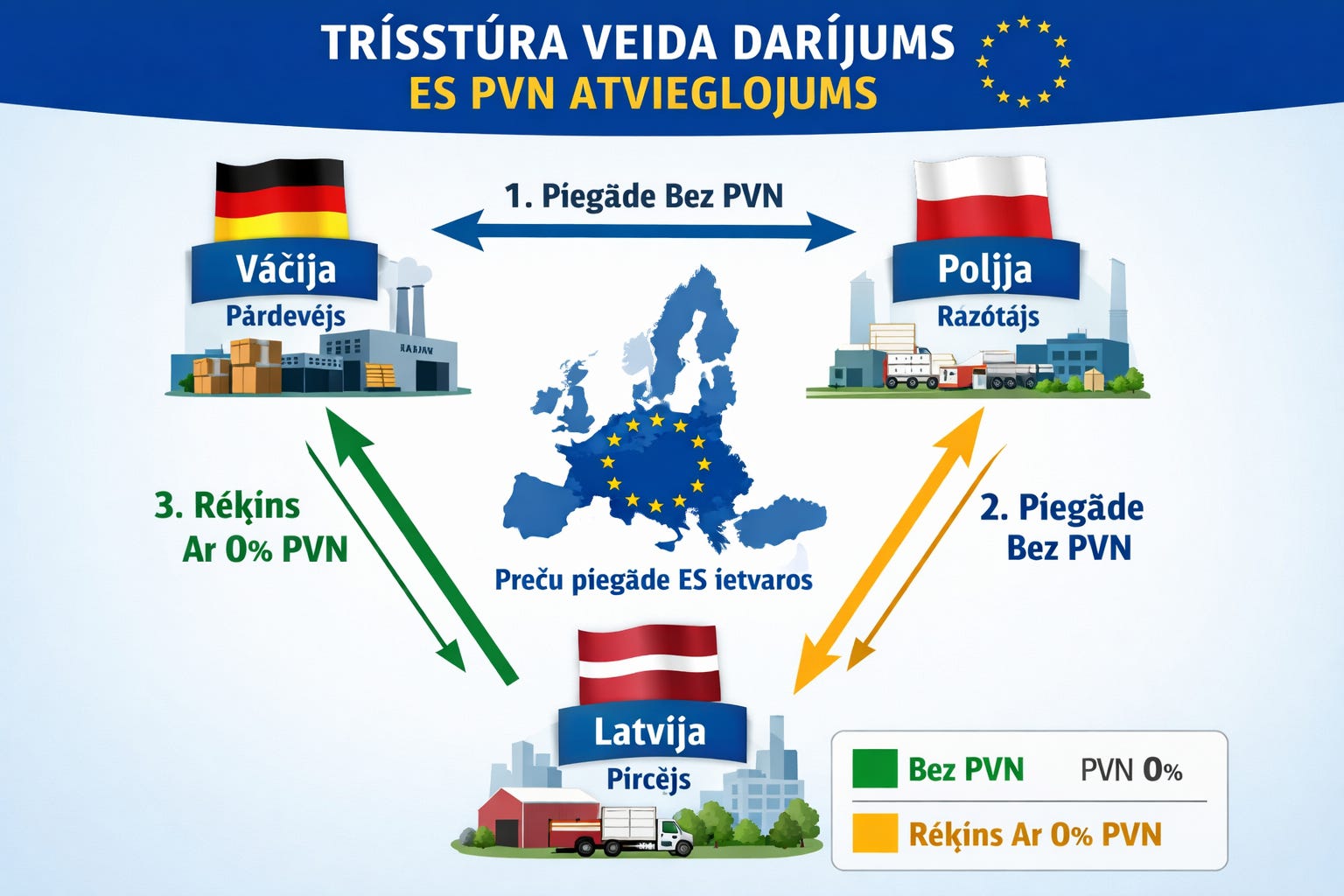
This case concerns the application of VAT to supplies of excise goods (petroleum products) under the deferred tax regime. The deliveries involved sellers in Latvia, intermediaries in Estonia and the United Kingdom, as well as buyers in other EU countries. The goods were delivered from Latvia to end buyers in other EU countries. Transport was provided by buyers in third EU countries. For now, it looks like a classic triangle.
